DTF vs. DTV: What’s the Difference—and Which One Should You Use?
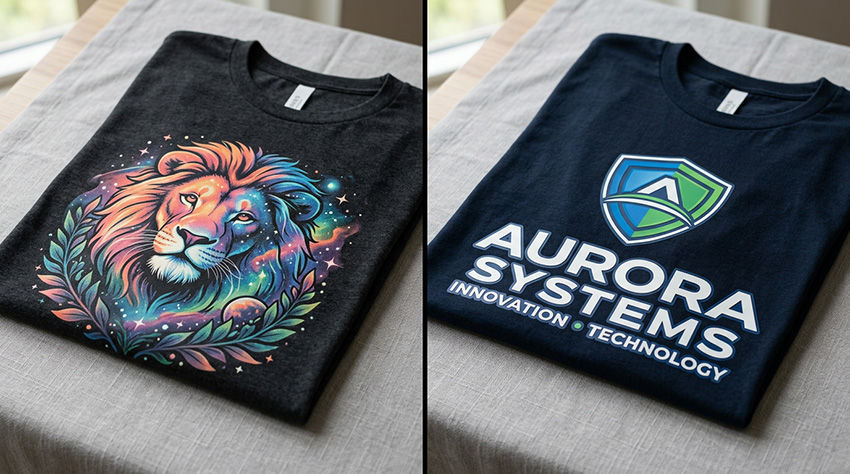
Choosing between DTF (Direct-to-Film) and DTV (Direct-to-Vinyl) can significantly impact how your final product looks, feels, and performs.
While both methods are widely used in custom apparel, they serve very different purposes. Understanding when to use each will help you deliver better results—and better value—to your clients.
What Is …?
DTF (Direct-to-Film)
DTV (Direct-to-Vinyl)
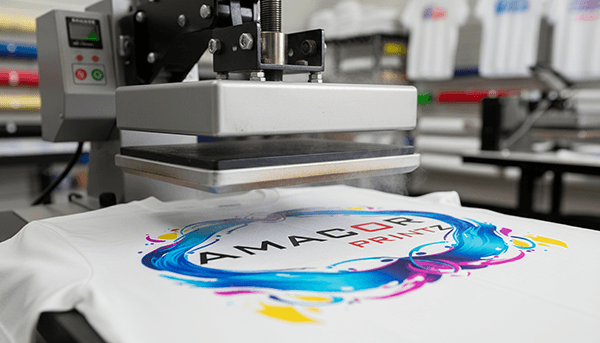
DTF is a transfer process that prints designs onto a film, which is then heat-applied to garments. It’s known for its versatility and ability to reproduce complex artwork.
DTV involves cutting designs from colored or specialty vinyl and heat-applying them to garments. It excels in precision and customization.
✅ Advantages
✅ Advantages
- Handles high-detail, full-colour designs (gradients, photos, fine lines)
- Works on almost any fabric—cotton, polyester, blends, and dark garments
- Produces a soft, flexible finish compared to traditional transfers
- Ideal for bulk production
- No weeding required, saving time on large runs
- Sharp, crisp edges—perfect for logos and text
- Ideal for names, numbers, and personalization
- Offers specialty finishes (metallic, glitter, puff, reflective)
- Great for on-demand or small-batch production
- Provides strong opacity, even on dark garments
❌ Limitations
❌ Limitations
- Limited to standard finishes (no puff, glitter, or metallic effects)
- Slightly softer edges compared to vinyl on simple shapes
- Requires proper curing for maximum durability
- Not suited for complex, multi-colour artwork
- Requires weeding, which slows down larger jobs
- Can feel thicker/heavier on garments
🌎 Real-World Applications
🌎 Real-World Applications
- Streetwear brands with detailed artwork
- Full-colour company logos
- Event t-shirts with photo-quality prints
- Large-scale production runs
- Sports jerseys (names & numbers)
- Corporate uniforms with simple branding
- Personalized gifts or small runs
- Fashion pieces using textured finishes
Choose DTF when your design is complex and consistency at scale matters.
Choose DTV when you need bold, clean designs or customization flexibility.
Quick Comparison
| DTF | DTV |
|---|---|
| Best for: Full-colour, detailed artwork | |
| Best for: Simple logos or text | |
| Best for: Bulk production | |
| Best for: Personalization / one-offs | |
| Best for: Specialty finishes |
Final Thoughts
There’s no one-size-fits-all solution when it comes to apparel decoration. The right choice depends on your design complexity, order size, and desired finish.
Many successful distributors use both methods strategically:
- DTF for scalable, high-detail production
- DTV for customization and premium finishes
At Amacor Distributors, we help you choose the right method for every project—so you can deliver consistent quality and stand out in a competitive market.